.png&w=2560&q=88)
What is a URL shortener service?
Long web addresses often include complex paths, query strings or tracking parameters that make them unwieldy in emails, social media posts and print materials.
A URL-shortening service converts a long, complex URL into a shorter, human-friendly link that redirects to the original destination.
For example:
https://www.example.com/blog/2025/03/new-customer-experience-report?utm_source=twitter&utm_campaign=brand-awareness&utm_medium=social
and turns it into something clean, simple and easy to share:
exmpl.co/report
Shortened URLs are easier to type, better looking in campaigns, more trustworthy to users and far more trackable for marketers, sales teams, product teams and content creators.
How do URL shorteners work?
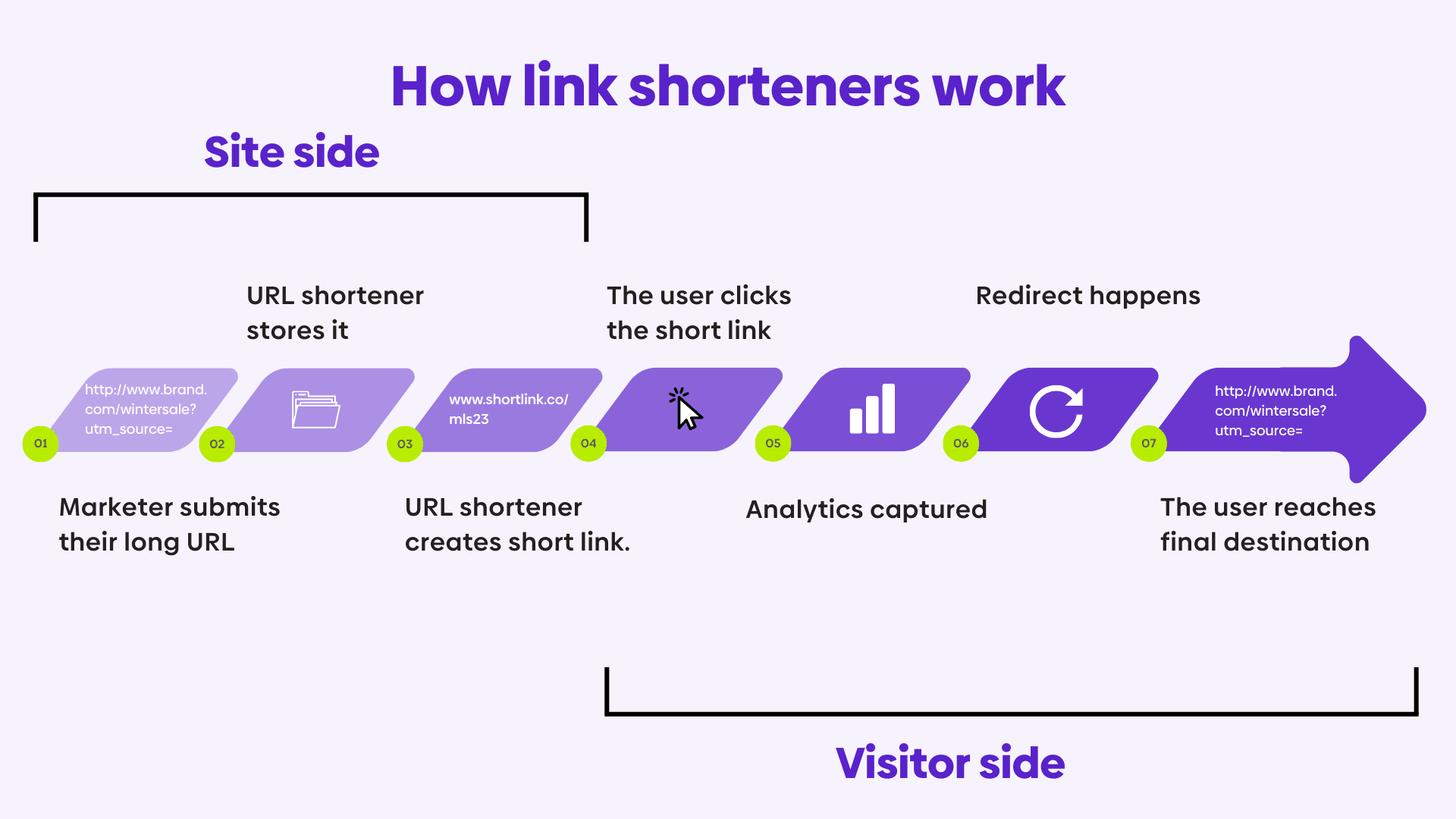
When you submit a long URL to a shortening service, the system stores the full address in its database and associates it with a unique identifier. The service then creates a short link (often using a branded domain like go.example/abc123). When someone clicks the short link, the request is routed through the shortening service, which records important metadata and forwards the user to the original URL. Most modern services use 301 redirects, preserving your SEO power.
Why shorten URLs?
1. Cleaner, more professional links
Long URLs can look messy, wrap awkwardly in emails or break when copied. Short links improve the visual appearance of messages and fit neatly into SMS, printed materials and social posts.
2. Better click-through rates
No one likes clicking a long, complicated link. When they see a simple, clean, shortened link, they feel safer and are more likely to click a link that looks intentional and understandable. This boosts your CTR.
3. Trackable, unified analytics
URL shortening platforms log every click before sending traffic to the destination. This information shows useful analytics such as geography, referrer and device type. Integrated analytics help marketers easily track campaign performance and identify which channels or messages resonate.
4. Offline & cross-channel tracking
Pairing short links with QR codes allows you to bridge offline media (flyers, billboards, packaging, event booths) and online content. This makes your materials less cluttered and simplifies tracking scan rates. Traditional web analytics can’t track these offline channels, but short links can.
5. Edit links without breaking anything
If your content changes, you can update the destination behind a short link without issuing a new URL. This prevents broken links in printed materials, emails, ads, partner content and QR codes that are already in circulation. No more reprinting marketing materials or losing traffic.
6. Consistent UTM & campaign tagging
Many shorteners integrate with UTM parameters and tag management, helping teams standardize naming conventions and avoid tracking mistakes, leading to cleaner, more usable data.
7. Prevent link rot
Website structures change. Campaigns evolve. Pages move. Short links act as permanent entry points. Even if your URL changes, the pages are replaced or the site is redesigned, you keep control over your link hygiene.
8. Centralized link management
For organizations with many teams or departments, link governance becomes essential. Enterprise-grade shorteners support visibility, access controls and audit logs, preventing unauthorized changes and maintaining link hygiene across multiple teams. It prevents chaos across marketing, sales, support and global teams.
Why would I need a link shortener?
Different teams rely on short links for different reasons, but the core value is the same: cleaner links, better tracking and more control.
1. Marketing teams
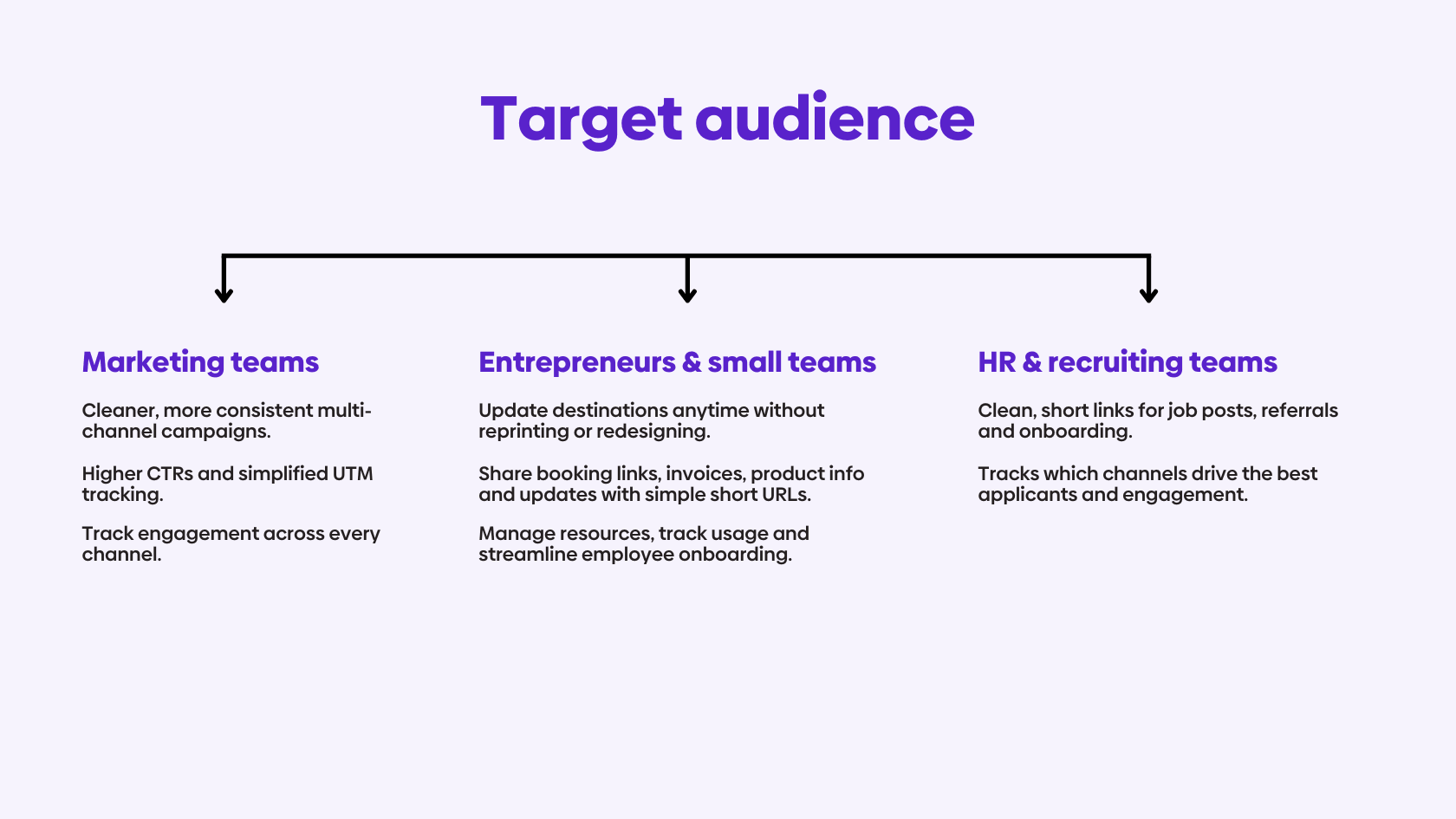
Marketing teams rely on link shorteners to keep campaigns clean, consistent and measurable. Short links improve click-through rates, make UTMs easier to manage and create a unified view of performance across social, email, ads, QR codes and offline channels. They help marketing teams test creative variations, track engagement across platforms and maintain a polished brand experience in every interaction.
2. Entrepreneurs & small teams
Entrepreneurs use short links to keep everyday operations simple and manageable, from sharing booking links and invoices to sending product info, menus and service updates. Shortened URLs are easy to share in person, over text or on printed materials and they help business owners update destinations without reprinting or redesigning anything. For busy teams with limited time and resources, short links provide a flexible way to keep information current across every customer touchpoint.
3. HR & recruiting teams
HR and recruiting teams use short links to improve communication with candidates and employees. Whether sharing job postings, referral links, onboarding resources, surveys or event materials, branded short URLs look professional and build trust. They also allow HR teams to track which channels produce the strongest applicant flow and improve engagement for internal communications without overwhelming people with long or confusing URLs.
What are common security risks associated with URL shorteners and how can I avoid them?
While link shorteners offer clear benefits, they also introduce risks that must be managed.
Risk 1: Enumeration and discovery
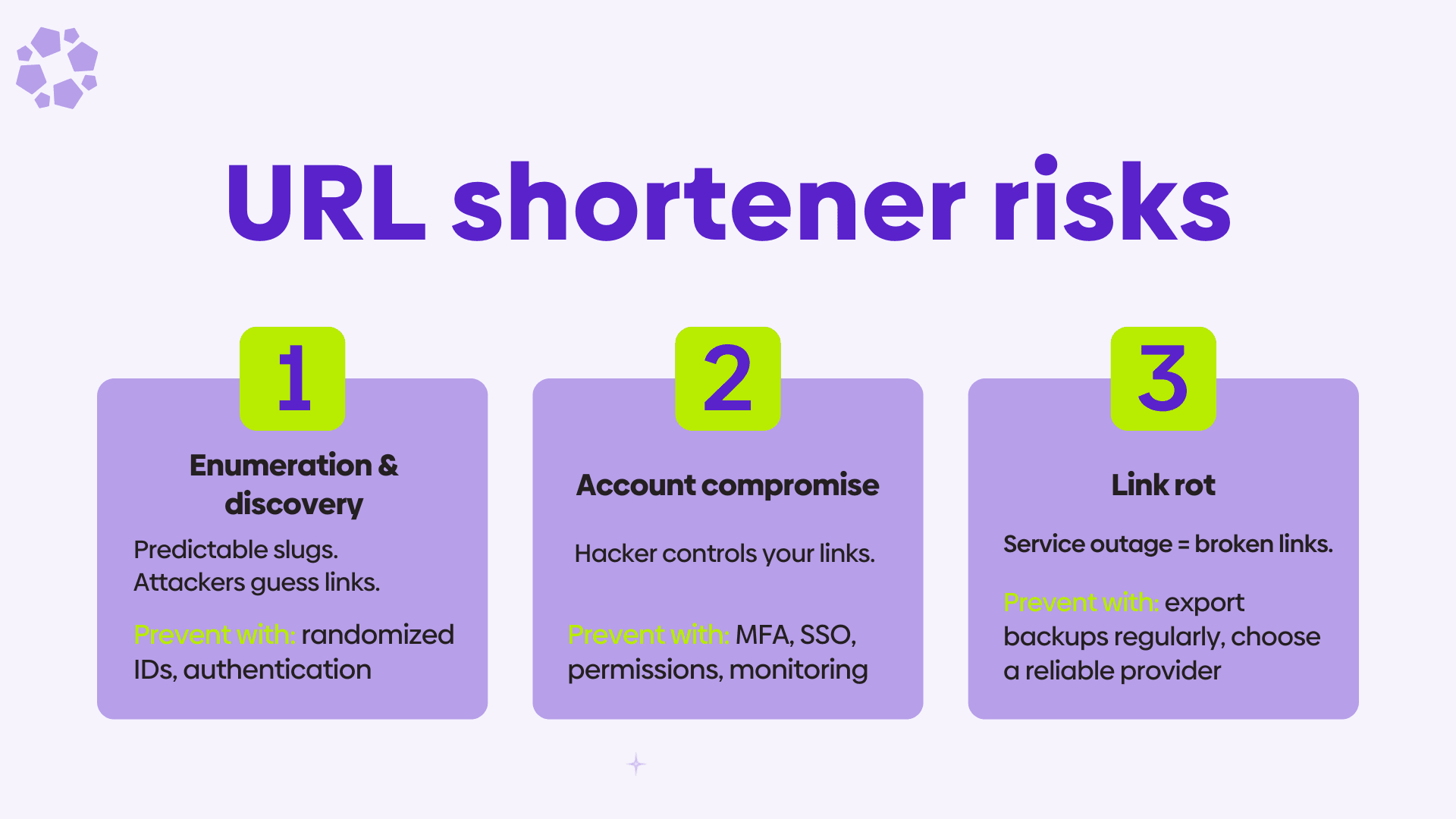
Attackers can guess your links and access private content.
Some shorteners generate predictable slugs or sequential slugs, allowing attackers to guess links and access sensitive content. Studies have shown that 5-6 character tokens in shortened links are most vulnerable to brute-force search.
To avoid it, use non-sequential, high-entropy link IDs (randomized strings). Require authentication for sensitive destinations or confidential assets. Avoid placing private or sensitive documents behind an “unlisted” short link.
Risk 2: Account compromise
If someone gets into your account, they can hijack every link you’ve ever shared.
If a hacker gets access to your shortener service account, they could hijack all of your links and redirect them, damage your brand, hijack your customer journey and incorporate malicious links.
To avoid it, choose a reliable, reputable shortening service provider with strong security practices. Make sure to enable MFA or SSO when possible. Use varying levels of permissions to reduce risk. Monitor login history for unusual activity and enforce strong, unique password requirements.
Risk 3: Link rot (broken short links)
If your shortener dies, every link you’ve published dies with it.
If a shortener’s service goes down, shuts down or you lose access, your links die instantly. Many brands have been burned by this. That’s why it’s important to choose the right URL shortening service. Free tools can be risky, as the company may disappear.
To avoid it, use an established shortener with uptime guarantees. Use a custom domain that you own, so you can move to another shortener if needed. Make sure to export your links regularly and verify they are still active.
How to choose a URL shortener service
Choosing the right URL shortener service depends on how you plan to use your links. Start by looking for a shortener that enables you to bring your own branded domain, which builds trust, improves click-through rates and gives you full control over your URLs. Strong analytics are equally important; your shortener should track device type, referrer, geography and filter out bots so you can measure campaign performance accurately.
Security features matter as well. Look for SSO or MFA, role-based permissions and audit logs to protect your links from unauthorized changes. If your organization has multiple teams, tools that offer workspaces and access controls will keep everything organized.
Finally, choose a service that supports editable destinations, QR codes, UTM management, API access and reliable uptime. The ability to export and migrate your links is also key to preventing lock-in or link rot. A strong URL shortener service should simplify link management today while giving you the flexibility to scale tomorrow.
Find your URL shortener today!
A URL shortener is more than a convenience; it’s a powerful layer in your marketing stack that improves performance, strengthens your brand and gives you the analytics you need to understand your audience.
Whether you're running global campaigns, distributing links across multiple channels or simply trying to reduce clutter in your communications, our URL shortener gives you the tools, clarity and control you need.
When it comes to branded links or vanity URLs, check out urllo’s link management platform for creating, managing and analyzing everything to do with links.
Frequently asked questions about URL shorteners
What is a URL shortener used for?
A URL shortener is used to turn long links into shorter, more shareable URLs. This makes links easier to use in marketing campaigns, social media posts, printed materials, podcasts, QR codes and digital ads, while providing detailed analytics on every click.
Are URL shorteners safe?
Yes, especially when using a reputable service or a custom-branded domain. Branded short links increase trust and reduce the risk of phishing because users can clearly identify your brand in the URL.
Do shortened URLs expire?
Shortened URLs do not expire unless you choose to set an expiration date. With enterprise tools, you can manage expiration rules or keep links active indefinitely.
Do short links affect SEO?
Shortened URLs do not harm SEO. With shortened URLs, search engines pass ranking signals to the destination URL. Short links are suitable for internal and external linking.
How do URL shorteners track clicks?
When someone clicks a short link, the request passes through a redirect service. Data is logged, such as timestamp, device, location and referrer data, then the user is sent to the final destination.
Are URL shorteners free to use?
Some basic URL shorteners are free, but advanced features like branded domains, analytics, routing and API access typically require a paid plan designed for business use.
Can I change the destination of a short link after it’s created?
This depends on your short link provider. Some URL shorteners allow unlimited edits while others don’t. Being able to update your long URL at any time without changing the short link itself is important for printed materials, ads or campaigns already in circulation.
Do URL shorteners stop bots from inflating analytics?
Modern URL shorteners can identify and filter machine traffic, email scanners, security bots, link previewers and crawlers, so your analytics reflect real human engagement.
Can URL shorteners generate QR codes?
This depends on which URL shortening service you choose. Choosing the right URL shortener will allow you to generate QR codes you can use in print, packaging, signage and offline campaigns.

By Sean Pasemko
SEO & Growth Marketing Specialist
Sean Pasemko is an SEO and growth marketer at urllo, where he works closely with SEO, IT and WebOps teams on redirect management, domain changes and site migrations.
His writing draws on practical experience analyzing redirect behavior, crawl efficiency and long-term site maintenance to help teams avoid common routing and performance issues.

.png&w=2560&q=88)

.png&w=2560&q=88)

.png&w=2560&q=88)